
TRIGGER WARNING discussion of intimate-partner sexual and emotional abuse, self-harm, suicide, killing, horror, supernatural possession
MAJOR SPOILERS for Obsession (2026), Carrie (1976), The Hunger (1983), Alien 3 (1992)
In this review / short essay I will interpret the movie using concepts from cisheteronormative psychoanalysis. As a trans* nonbinary lesbian I am fully aware of the limitations of such framework, but decided nonetheless to apply it for a movie that is undeniably entirely built within or upon heteropatriarchal gender archetypes and only displays cisgender characters with heterosexual romantic, erotic and sexual interests.
I’m also gonna assume you watched the movie, so I’m not gonna make a recap. I’ll describe specific plot points and composition elements when referring them, so don’t worry if you don’t remember every detail.
As an avid watcher of psychological horror and a sucker for deep dives in gender dynamics within the genre, when the movie Obsession came out earlier this year I got immediately captivated by its simple premise: a guy uses a magic novelty toy to wish for his non-reciprocated crush to completely fall in love him; the wish actually works and starts possessing the girl, turning their lives into a nightmare. After missing its theatrical release, I managed to “borrow” a digital copy from my “trusted library” and recently watched it. But after the enormous hype and unanimous acclaim that surrounded its release, and even the extremely positive reviews from some of my favourite video essayists, I couldn’t help but be very disappointed by what I had watched. Although masterfully crafted, from a very convincing direction and screenplay to stellar performances from the actors, some of the artistic choices ultimately undermined all attempts, if there were any, to convey a deep understanding of what I consider the main underlying subject, and by completely ignoring crucial perspectives the movie instead favored a more superficial ouverture of other themes, overshadowing pivotal problematic events. Before I expand on my criticism, I would first like to give my perspective on where I think Obsession manages instead to shine.
THE GOOD STUFF
Starting with the technical aspects of the movie, I found its manufacture to be nearly impeccable. Both Michael Johnston (gay icon btw) and Inde Navarrette (bisexual icon btw) smashed their protagonist roles as Baron “Bear” Bailey and Nikki Freeman, both with an extremely convincing expression range. Navarrette’s performance in particular achieved what I felt was the closest she could get to perfection and made every single line count. The actors’ job was of course helped by a very solid and believable script and a capable direction by Curry Barker.
Talking instead about the atmosphere of the movie, while the choices of scenery and photography were not groundbreaking, some of the darker visuals gave me the chills. In general all the visual ambience was functional to the movie without being distracting. The most forgettable elements were probably the soundtrack and sound design, but they were simply not noteworthy without being bad.
What I was truly interested in going into this film, though, was its themes.
The Male Gaze – Pt. 1
The concept of male gaze was introduced by art historian John Berger in the 70s to describe the way traditional European art is, for the vast majority, created by male artists specifically for a male audience, thus confining women to a role of objects of the male artist and viewer’s gaze, which in turn reinforces a patriarchal narrative that denies and undermines women’s agency and subjectivity by delegitimizing, ignoring or erasing their perspective. Film theorist Laura Mulvey later expanded upon this concept by analizing its role in cinema with the essay Visual Pleasure and Narrative Cinema[1]. Among other things, narrative media traditionally introduce another element of male gaze, the male protagonist whose perspective is used as a frame of reference for the events and relations of the story.
At first sight, Obsession is a perfect textbook example of male gaze: written, directed and edited by male filmmaker Curry Barker, following the perspective of a male protagonist, for an audience that is mostly male (while a lot of women and queer people are certainly horror enthusiasts, both statistics about horror screenings and anecdotal evidence from people who went to the theaters strongly suggest that the large majority of the audience was male). However, after looking at this passage by Mulvey suddenly the perspective shifts: «the determining male gaze projects its phantasy on to the female figure which is styled accordingly»[1]. And it makes sense, given that the narrative doesn’t seem to actually endorse the male protagonist’s choices, that the reality of this movie is that the male gaze is itself the horror. Bear literally projects his fantasy on Nikki with his wish, imposing on her something she is not and does not want, and changing and reshaping her accordingly. The horror of Obsession is observing the extreme consequences of patriarchal objectification, a diegetic supernatural transposition of the subtle but omnipresent cultural process that denies women autonomy and agency over their own bodies and minds.
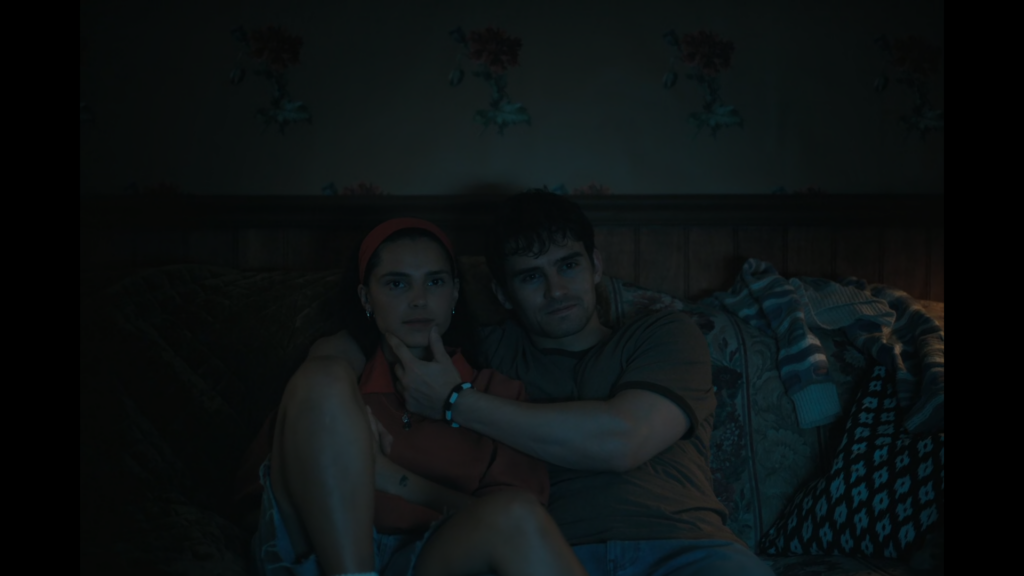
Through this lens, Bear perfectly represents the stereotypical (but unfortunately rooted in reality) nice guy™ who is not really being “nice” out of respect for the person in front of him, but instead as a currency that, in his eyes, entitles him to her love, her body and her life. This reading is also supported, at the beginning of the movie, by the way he’s dismissive and uncaring towards his friend Sarah, who has a crush on him, simply because he is not attracted to her; he then suddenly and opportunistically starts caring about her towards the end, when her attentions become a chance to escape, either mentally or physically, from his spiraling dynamics with wish-possessed Nikki. We can also see how the entitlement Bear feels towards Nikki herself is linked to the way his wish is formulated: he doesn’t wish for a chance with her, or to get the courage to finally open up about his feelings, or even to become himself more desirable to her (which is the plot of Shrek 2?); he instead wishes her feelings away and forcefully replaces them with his relational and sexual fantasy. As Robert A. Caro said, “power doesn’t always corrupt, what power always does is reveal”, and as soon as Bear finds power over Nikki in the form of the One Wish Willow, his mask falls off, and the nice guy reveals that to his eyes Nikki is nothing but an object to be owned, sexually assaulted, coerced and forced into captivity. Bear’s wish reveals and embodies his male gaze into the world and, consequentially, Nikki’s perspective is left out of the picture, with the film literally hiding her face in darkness or behind objects, in a not-so-sublte symbolism that reminds us that she is not here because Bear refused to truly see her (and instead only watched her) in the first place.
Monster Pains
In her 2005 essay Monster Pains: Masochism, Menstruation, and Identification in the Horror Film[2], Aviva Briefel analyzes the way certain modes of suffering of the monster figure produce gendered forms of spectatorial identification. Leaving the aspect of spectatorship outside of the picture for now, what Obsession does is an interesting subversion of the categories represented in the essay.
The male monster, according to Briefel, undergoes pain through a voluntary form of masochism: as exemplified by the characters of the likes of Dr. Jekyll, Seth Brundle from The Fly (1986), Freddy Krueger, the hitchhiker from The Texas Chainswas Massacre (1974) and the Cenobites from the Hellraiser franchise, this form of self-inflicted pain is the result of a deliberate step they take to push the boundaries of self-actualization and discovery. It’s a voluntary action that lies at the origin of their monstrosity, and precedes their sadochistic rampage.
About the female monster, she instead notices that her masochistic acts are carried out «by coercion from an outside force or as a way of terminating her monstrosity». The first type is embodied in figures like Regan and Frankie from The Exorcist (1973) and Stigmata (1999), and represents a total passivity and lack of agency of the feminine figure, who is pushed into a state of monstrosity by forces entirely out of her control. This mode parallels the loss of innocence that is attributed to menstruation by traditional patriarchal European symbolisms. Menstruation is indeed prominent or explicitly implied to be linked with monstrosity and the loss of innoncence in Carrie (1976), Ginger Snaps (2000), The Exorcist and Audrey Rose (1977) among others, and is tied through the themes of pregnancy with movies like The Fly and Rosemary’s Baby (1968). On the other side, «when women do assert a more active control over their self-inflicted pain» she contrapposes «it is often out of a self-destructive impulse that eliminates rather than generates monstrosity». Carrie from the eponymous De Palma movie, Ripley in Alien 3 and Sarah in The Hunger all sacrifice themselves to end or prevent any further suffering and death from being inflicted to others.
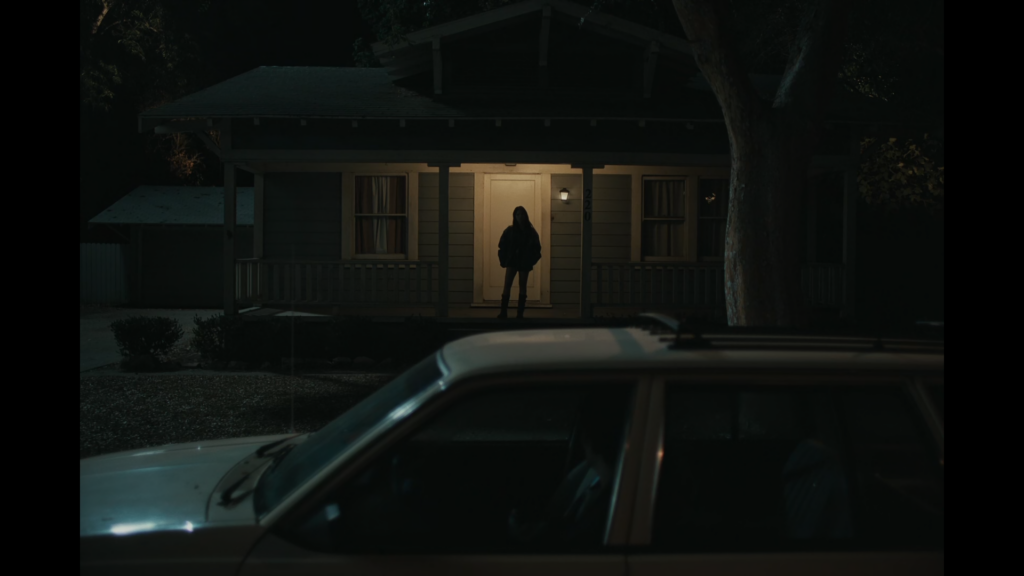
Turning our gaze to Obsession, Nikki herself is clearly adherent to the assessed characteristics of female monstrosity, being helplessly possessed and repeatedly hurt by Bear’s wish, and even trying to end her own life both by hitting herself with a broken bottle and by asking Bear to kill her, in the only rare glimpses of being herself. The scene where she unloads her bladder while paralized in place by the wish, waiting for Bear’s return, mimics the symbolism of loss of immaculateness through passive, uncontrollable menstruation. At the same time, Bear’s wish as the entity possessing Nikki is a monster itself. Its relationship to Bear displays back and forth dynamics of emotional dependency, lovembombing and total devotion on one hand, and controlling, suffocating, threatening and abusive behaviours on the other, a textbook portrayal of an abusive partner made extremely impactful and credible by Navarrette’s incredible performance (it is worth noting that Bear nonetheless never stops persuing sexual interaction with Nikki despite knowing she’s possessed and incapable of giving consent, and while he’s partially portrayed as a victim of abusive dynamics, he keeps sexually assaulting her throughout the whole movie). The wish stalks Bear: it watches and objectifies him from afar, from Nikki’s porch as he’s in the car, from the shop counter as he tries to have a private conversation with Ian, from behind Bear’s courtains in the guise of an uninvited Nikki that knows where you live, from the restaurant aisle while he’s on a phone call, from the dark corner of the room during his sleep. The wish enacts traits that mirror what in slasher horror is traditionally a male-embodied predatory figure, and even by looking at its voluntary self-harm or threat of it as a tool to guilt-trip and manipulate Bear, it’s clear that in Briefel’s terms we can talk about a form of male monstrosity and masochism. This works because the wish is the embodiment of Bear’s own male gaze and his incapability of seeing love as anything but possession: all it does is bring to the extreme the consequential controlling and abusive behaviours that do not spawn out of malice but instead out of fear of losing someone, as Mariana Colín (TheMorbidZoo) expresses in her “Backroomsession” review and analysis[3].
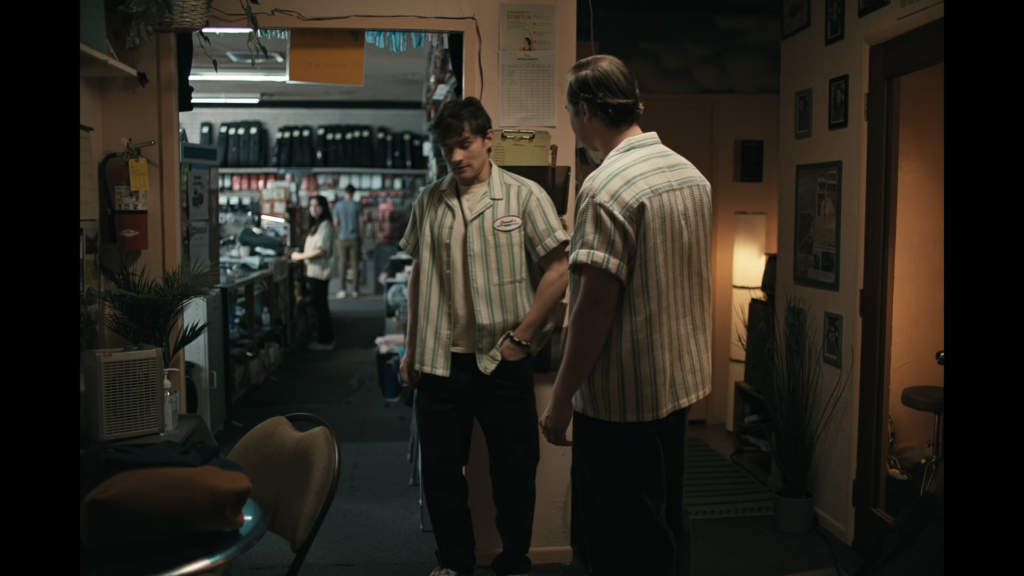
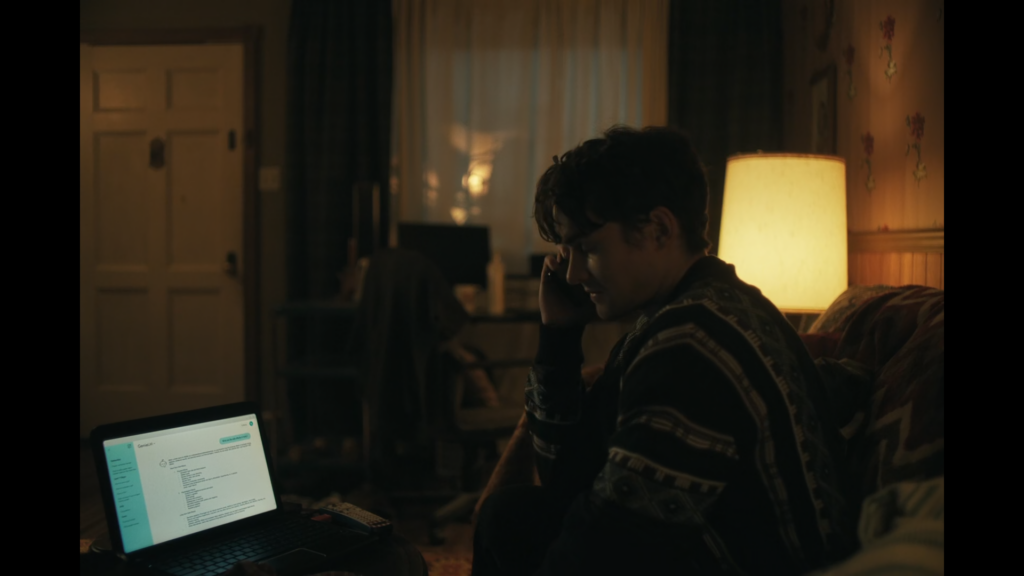
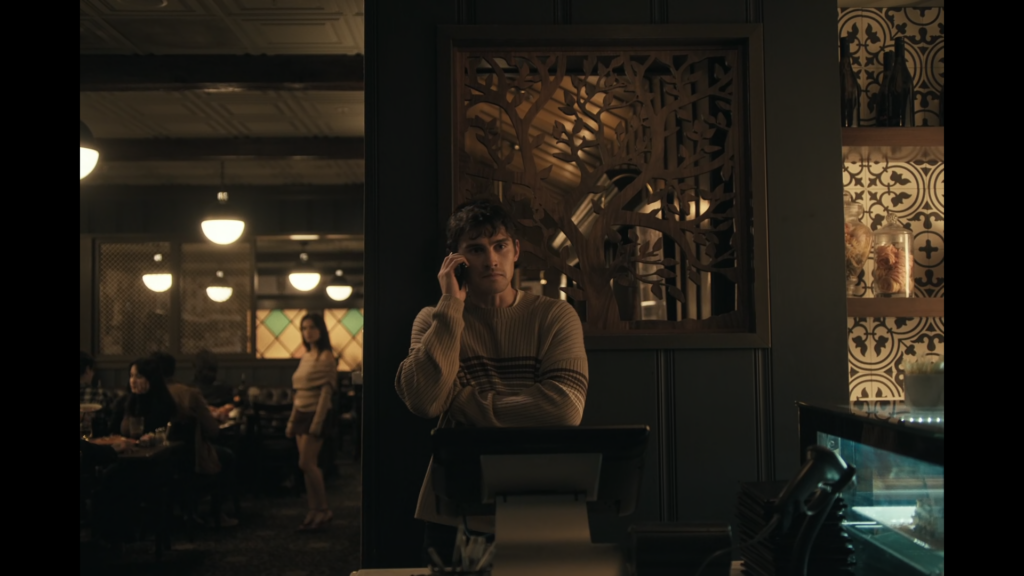
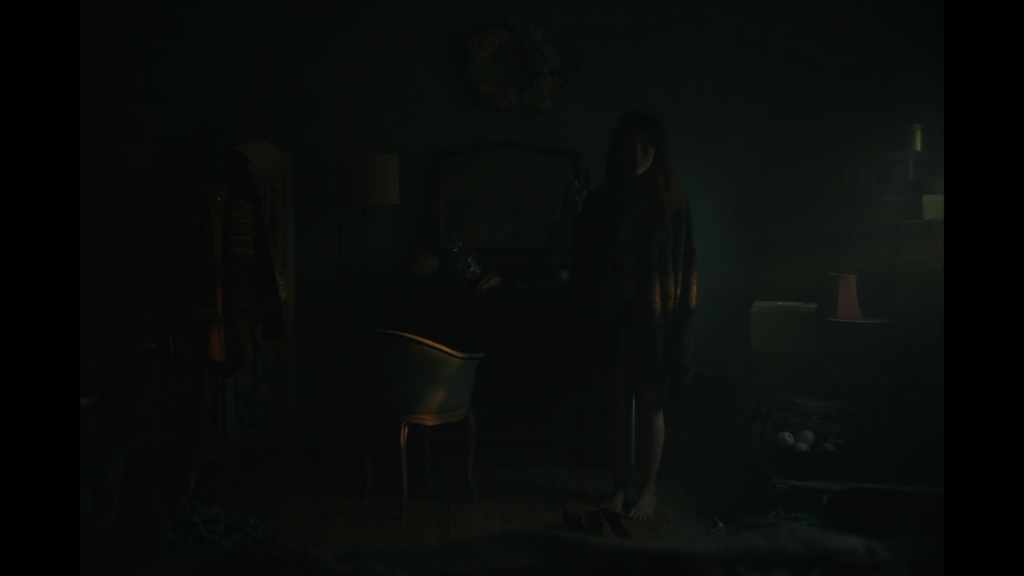
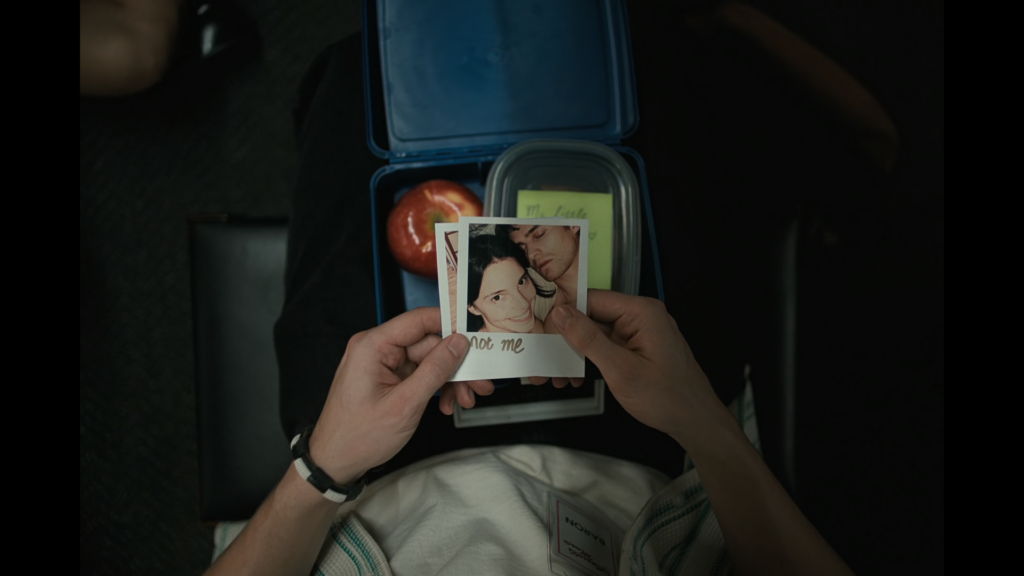
The aspects of male monstrosity within the wish initiate a reversal of gender roles, in which Bear becomes the symbolic mother of the monster and must embrace his new place and accept the responsibility and consequences of bringing the wish to life to put an end to Nikki’s suffering. But in the wake of his controlling attitude, he refuses to care and defers that responsibility onto his friends, Ian and Sarah, who suffer the ultimate consequences of his (in)actions. The weakness and cowardice of Bear aren’t an expression femininity, but an ostentation of masculinity in his unwillingness to accept the obligations resulting from his symbolic motherhood. Like with Carrie (Carrie), Ripley (Alien 3) and Sarah (The Hunger), the only way out is self-sacrifice, but even after realizing it and almost doing the right thing, he steps back out of egoistic pusillanimity and only meets his demise when his own wish accidentally kills him in an act of all-consuming self-annihilating desire of possession, just like the One Ring in Talkien’s story.
THE BAD STUFF
These readings may seem obvious to a certain degree to someone who is already familiar with feminist discourse on abuse and feminist readings in the horror genre. More than half of the women, queer people and feminist men watching this movie probably understood Bear as a problematic dude within the first 5 minutes of the movie, and I would expect close to a 100% of any vaguely feminist person to have pieced together the framing of Bear as a “bad guy” (or better put, as a predatory and abusive nice guy™) before the 30 minute mark, thus enabling the interpretation of the following events as the extreme consequences of his objectifying gaze upon Nikki. But the artistic decision to maintain Bear’s POV throughout the whole runtime, and therefore to focus on his own distress above all, muddies the waters and makes it not so obvious, especially for an audience unfamiliar with feminism, to view him as responsible for the tragic events in the movie, and may even lead to understand him as a victim of something else than his own actions. The amount of reviews completely missing (what I think is) the point of the movie, not limited to the virally deranged Alex Meyers’ one[4], and experiences like the one narrated by Eleanor Johnson[5], confirmed the gut feeling I had when I finished watching Obsession: that the movie did not succeed in bringing to the screen a clear, coherent narrative about the male gaze and sexual and emotional abuse.
The Male Gaze – Pt. 2
My first reaction after finishing Obsession was: what about Nikki? After Bear makes his wish, the moments in which Nikki manages to snap out of the possession are sparse and very brief, and while they sketch a portrait of what it must feel for her, being in her hellish situation, they just barely do so as she doesn’t really get the time and space to express herself. In the 1 hour and 24 minutes from the beginning to the end of her possession, the scene that gives her the most is a 74 seconds dialogue (the one when the wish is sleeping and she asks Bear to kill her) where her face isn’t even visible (which is barely compensated by Navarrette’s masterful vocal performance) and in which Bear actually has longer lines. The second place goes tied to the 13 seconds sequence of her screaming “it’s not me!” and stabbing her own face with the glass bottle and the 13 second screaming at the phone from the customer support. The fourth and final place is held by 2 seconds of “wait what the fuck” after their first kiss, amounting to a total of 102 seconds (less than two minutes), 2% of the time of her possession and 1.6% of the total 1h45′ runtime dedicated to consider her perspective in a film which is entirely revolving around her abuse, appurated that no other character, not Bear, nor Ian, nor Sarah, spend even one second on screen concerned that she might be possibly being abused. Borrowing Emily Wilson’s review of the completely unrelated Christopher Nolan’s Odyssey[6]:
But the representation of Odysseus as a reluctant warlord makes a nonsense of the movie’s imagined world. We are not shown that war or killing are bad, only that good men sometimes feel bad about it – a very different point. Any serious depiction of violence, ancient or modern, must show the perspectives of the victims as well as the perpetrators, and the Homeric poems easily clear the bar – but Nolan doesn’t
and let me add, nor does Barker in Obsession, a movie in which Bear doesn’t even “feel bad about it”.
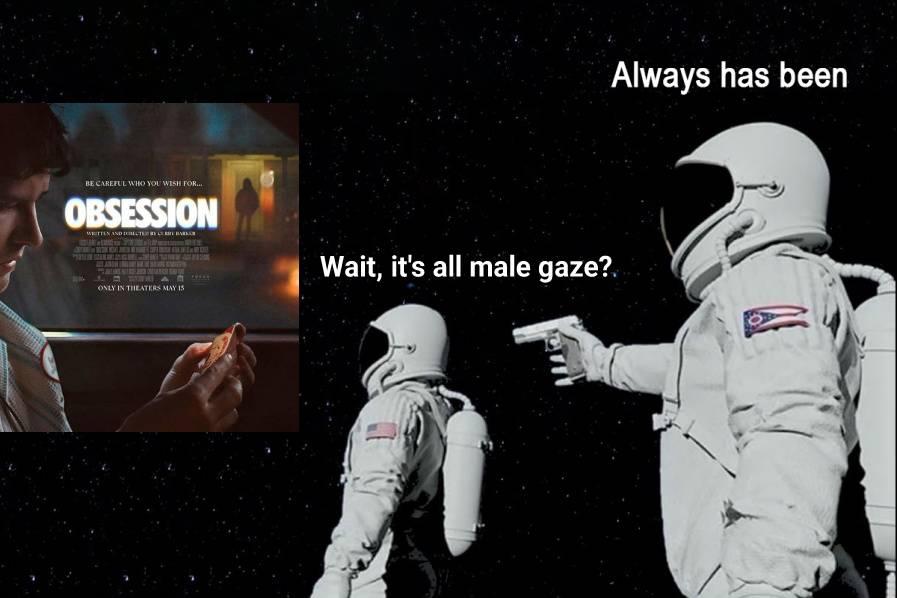
While the film never endorses Bear’s behaviour and makes it quite clear that he’s not an example to follow, no character holds him responsible for anything that happens, with the sole exception of Nikki, whose perspective is almost absent, and the customer service guy (who btw gets 2 minutes and a half of screentime, more than Nikki gets to express her perspective on what’s happening) in a scene that could be argued to be framing Bear as a victim who got tricked/scammed. By suppressing Nikki’s perspective, all that’s left is a protagonist and his two friends neither of whom realize he’s wrong and a brief commentary from an anonymous sleepy guy over a customer service line. While to me the intention of the movie to depict Bear’s actions as abusive is clear, the movie itself is doing nothing to help anyone who isn’t already familiar with feminism to reach this same conclusion. Eleanor Johnson’s blog post Obsession (2026): A Reflection on Audience and Misogyny[5] makes this very evident from the fact that during the screening the audience was «laughing. Hard. They were laughing at how intensely feckless Bear was. Laughing at him, of course, had the effect of making him seem much less menacing, much less threatening, and much less of a predator».
To be clear, I’m not advocating for Bear to be portrayed as a unmistakeably evil overlord of creepy serial killer abusers: the depiction of Bear himself really has nothing wrong and, on the contrary, nuance is always appreciated. I was pleasantly surprised to finally find a movie that shows the abuse, entitlement and misogyny that hide behind the nice guy. It’s the complete absence of Nikki’s (the real one) voice on the abuse she’s undergoing that removes any menacing and threatening quality from Bear’s actions: understanding complex interpersonal dynamics requires different perspectives, and eliminating Nikki’s point of view transforms any potential nuance into a shallow, gray moral positioning of the movie, which shouldn’t be contemplated for topics like sexual abuse.
Trauma Porn, Tragedy and Final Girls
In the last moments of the movie, after Bear dies and the film can finally focus on Nikki, all we get is less than 30 seconds of her shocked expression before the camera rolls away to the end credits, as we are set to listen to 2 bloodcurdling minutes of her agonizing cries accompanied by a lighthearted, cheerful romantic song. As much as I wanted to believe, with all the good faith in the world, that her inconceivable pain was taken seriously by director Barker, and I get his intention to go for the unsettling vibes of “blood and horror with upbeat music” cliché, as I saw the last seconds of this film I could not believe how little respect was given to Nikki’s character by the filmmaker. How little care for the trauma she went through, how little depth and afterthought was allowed for her feelings and expression, and I felt like her agonizing screams and cries at the end were not there for the viewer to empathize with, but for shock value. As I said, the “blood and horror with upbeat music” cliché is culturally bound to creepy and unsettling scenes, not for moments of depth and understanding, and this gives away, to my eyes, an intention I can’t describe as anything but trauma porn. This is furtherly proven by Barker’s words about the originally intended ending[7]:
I was really obsessed with this Romeo and Juliet ending, actually […] We shot both; we shot this ending that you see in the movie, and we shot the ending where she ends it all […] It was a very technical shot, and so we only gave her one where she survives […] You see her coming to this realization that she’s alive again, and she’s looking around the room, and she looks so disturbed, and I just remember my dad and multiple people around me being like, “Dude, I think it’s way more disturbing if she just survives this thing” I was like, “Ah, you’re right”, and so we switched it […]
I think she’s experienced awful, awful things in there, I think she’s pretty traumatized by what she saw, and she’s traumatized by not having control of her body. That’s kind of why the Romeo and Juliet ending works for me, because she was taking control for the first time in a while.
Which to me sounds like putting aside a well-thought finale of self-determination that would have fit a romantically tragic character like Nikki, to chase shock value instead. Her suffering and grief don’t serve the purpose of revealing the tragedy of her experience, they are instead put on screen to disturb the audience. Navarrette’s words[8] about the finale sound even further from both what I watched and what Barker recalls:
We had an alternate ending where Nikki kills herself, and we shot that, where, in the very end, she can’t deal with that trauma, and she decides to die. Last minute, we decided to change it. Like, ‘No, she’s a final girl. She wouldn’t do that. She’s gonna sit with the grief.’ And also, at the same time, we’re following her this entire time. Curry was like, ‘No, we really want to sit with her.’ And that’s why we got the ending that we did. So that day, we decided to change it.
First, the movie doesn’t sit with Nikki at all, and it’s not following her the entire time – it hardly following her at all. Second, Barker’s decision was based on the “disturbing” factor and not on the interpretation of Nikki as a Final Girl. Third and foremost, Nikki is not a Final Girl at all. Sure, she shares almost all of the nominal qualities that Carol J. Clover assesses for the trope in Men, Women, and Chainsaws[9]:
The image of the distressed female most likely to linger in memory is the image of the one who did not die: the survivor, or Final Girl. She is the one who encounters the mutilated bodies of her friends and perceives the full extent of the preceding horror and of her own peril; who is chased, cornered, wounded; whom we see scream, stagger, fall, rise, and scream again. She is abject terror personified. If her friends knew they were about to die only seconds before the event, the Final Girl lives with the knowledge for long minutes or hours. She alone looks death in the face, but she alone also finds the strength either to stay the killer long enough to be rescued or to kill him herself. […] Unlike her girlfriends [the Final Girl] is not sexually active. Laurie (Halloween) is teased because of her fears about dating, and Marti (Hell Night) explains to the boy with whom she finds herself sharing a room that they will be using separate beds. Although Stretch (Texas Chain Saw II) is hardly virginal, she is not available, either; early in the film she pointedly turns down a date […] So too Stevie of Carpenter’s The Fog, […] is unattached and lonely but declines male attention. […] The Final Girl is boyish, in a word. Just as the killer is not fully masculine, she is not fully feminine – not, in any case, feminine in the ways of her friends. Her smartness, gravity, competence in mechanical and other practical matters, and sexual reluctance set her apart from the other girls [in the movie]. Lest we miss the point, it is spelled out in her name: Stevie, Marti, Terry, Laurie, Stretch, Will, Joey, Max.
But Nikki lacks the crucial onscreen psychological development that is required for the audience to achieve an identification with her.
A figurative or functional analysis of the slasher begins with the processes of point of view and identification. The male viewer seeking a male character, even a vicious one, with whom to identify in a sustained way has little to hang onto in the standard example. On the good side, the only viable candidates are […] for the most part marginal, undeveloped characters [and] tend to die early in the film. […] On the bad side, there is the killer. The killer is often unseen or barely glimpsed, during the first part of the film, and what we do see, when we finally get a good look, hardly invites immediate or conscious empathy. […] In either case, the killer is himself eventually killed or otherwise evacuated from the narrative. No male character of any stature lives to tell the tale.
The one character of stature who does live to tell the tale is in fact the Final Girl. She is introduced at the beginning and is the only character to be developed in any psychological detail. We understand immediately from the attention paid it that hers is the main story line. She is […] the only one, in other words, whose perspective approaches our own privileged understanding of the situation. We register her horror as she stumbles on the corpses of her friends. […] She is the undisputed “I” […] When she downs the killer, we are triumphant. She is by any measure the slasher film’s hero. This is not to say that our attachment to her is exclusive and unremitting, only that it adds up, and that in the closing sequence (which can be quite prolonged) it is very close to absolute.
While her character has all the elements that could put her in the role of a Final Girl, the movie itself doesn’t give Nikki (the real one) enough space and foreground presence to allow the male audience to shift their perspective to identify with her. Her survival is not a triumph over Bear’s abuse nor over the wish’s possession: it is the tragedy of the survivor, turned into a spectacle of objectified pain and trauma the viewer is not encouraged to empathize with in unless they’re already doing it autonomously in the first place.
(TW graphic description of the longest sexual assault scene)
After seeing the whole movie, thinking about the 20-fucking-agonizing-seconds-long scene of Bear penetrating Nikki I had to go through made me feel betrayed. It was really hard to watch listen to her fake moans creating a painful dissonance with her completely blank stare, giving away her complete dissociation, while he didn’t even glance at her. The exposition to a full-on rape scene the audience wasn’t even warned about must have triggered so many women and queer people in the audience forced to relive their own or their peers’ traumas – it surely triggered me.
The bare minimum the movie could have done after this was acknowledging diegetically Bear’s sexual assault on Nikki, either through confrontation or through an explicit alignment of the medium with Nikki’s perspective. But neither of the options were chosen and all we got was a display of trauma that somehow, at the same time, refused to acknowledge the person that went through it. Even if the lack of concern by her supposed friends Ian and Sarah could be intended as showing the horror of the silence and compliance surrounding sexual violence in intimate relationships, I am once again convinced that the movie doesn’t do a good enough job in treating such a theme with the necessary depth: no conversations between Nikki and anyone except Bear are shown from the moment of her possession, even though we know that she’s talking to Ian, so the movie doesn’t really even try to put an accent on the fact that he’s not being a good friend to her and decides to keep that dynamic hidden: out of screen, out of thought.
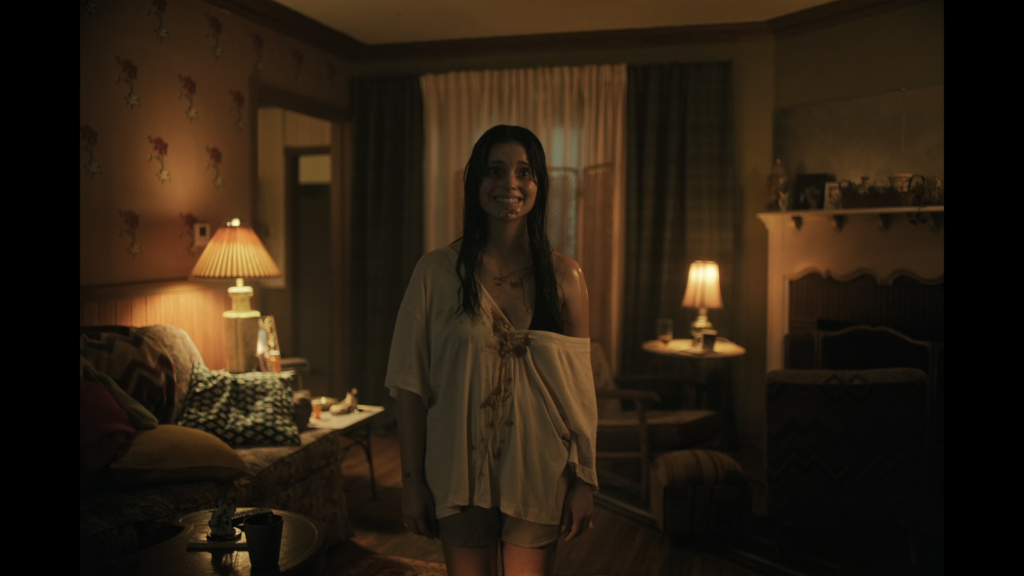
One could argue that the line between trauma porn and a horror movie about abuse is thin, but it truly isn’t: it all lies within the simple question of who the audience is invited to identify and empathize with. And it’s not hard at all to answer this for Obsession, a movie that spends 98% of its runtime focusing on Bear’s feelings of distress coming first from his anticipation for confessing to Nikki, then from the abusive and obsessive relationship with his own wish and finally, in the third act, from the homicidal rampage resulting, again, from his own wish. It’s not surprising then that reviews like Emma Stefanksy’s one for The Atlantic[10] open up with «the premise of the hit horror movie Obsession may sound relatable: What if you had a totally debilitating crush on someone but were too afraid to confess your feelings to them?», continuing with sentences like «that desire becomes more than Bear ever bargained for» and describing the movie as «dramatizing a particular kind of Gen Z anxiety spiral: the feeling of being trapped by their own social fears». And then these words just put the nail in the coffin: «Obsession doesn’t seem so interested in concerns such as intimate-partner abuse, although it could easily be interpreted as an allegory for it». There are two possibilities at this point:
- Stefanky is right about the movie, and Barker is more concerned with a boy’s fear of confessing his crush than he’s invested about the fact that his entire fucking movie revolves around a guy coercing a girl into a non-consensual intimate relationship basically depicting every woman’s worst nightmares and traumas for 90 minutes
- Stefanky is wrong, and the movie is actually more concerned about abuse and male gaze, but Barker just did a really, really, really poor job of making it clear
Neither of the possibilities looks good, and the fact that Obsession has been one of the most talked movies of the summer because of a relentless online debate between feminist and misogynistic takes doesn’t help the cause. Which brings us to another problematic interpretation.
Freaky Nikki
Allow me to borrow again from Eleanor Johnson’s blog post[5], as she puts it perfectly:
And from very early on in the film, my fellow theater-goers were laughing. Hard. They were laughing at how intensely feckless Bear was. […] But more than that, they were laughing at Nikki’s character, reacting to her as absurd, rather than primarily terrifying. And then I realized: most of the people in the theater were reading her character not as a reversal of the usual sexually predatory male trope in slasher movies, but as an exaggerated version of the trope of the clingy, pathetic woman trope. […] She read to this audience, to quote from Wayne’s World, more like a “psycho hose beast” than a “predatory sex offender”. As soon as the audience started laughing at Nikki, the feminist critique flew right out the window. Once Nikki gets laughed at, the whole notion of her functioning as a rape revenge monster evaporates. […] Nikki wasn’t scary; she was ridiculous. And in that reading, the film winds up seeming about as misogynist as possible, offering a risible and brutal spoof of the power dynamic disparities that exist in many hetero couples between men and women. We’ve all been there, echoed the laughs around the room, stuck in a relationship with a girl who just can’t get over it. Ha. Ha.
At least half (and I’m being conservative) of the film’s vocal audience on the internet has interpreted Nikki within the misogynistic trope of the hysterical jealous girlfriend. Together with an online debate sparked over the idea that she was meant to represent borderline personality disorder, the crazy controlling girl narrative completely overshadows any attempt to bring feminist readings of the film to a collective dimension. As I already stated in the Monster Pains paragraph, I agree with Johnson’s interpretation of wish-possessed Nikki as “a reversal of the usual sexually predatory male trope in slasher movies”, as she becomes the direct embodiment of Bear’s controlling and possessive idea of love and thus inherits its patriarchally masculine connotation. Both the marketing and the movie are full of hints at this reading that depict Nikki as a stalking presence, in the dark, observing Bear from afar. At the same time, a non-feminist audience is going to read every action not at face value, but through a lens of gendered expectations: the same action seen as a woman’s crazy behaviour can and will be understood in a completely different light if performed by a man. A man’s outburst of jealousy is reasonable and understandable, or gets scary and threatening at most if he has a knife out; if a woman does it, she’s hysterical and psychotic. The misogynistic Freaky Nikki interpretation is fueled further by the fact that even the support characters of Ian and Sarah align with Bear, and rather than worrying for Nikki’s wellbeing they immediately label her as crazy, never entertaining the possibility that she might be a serious threat, let alone that Bear might be taking advantage of her in the first place (Ian only mentions that other people think that, but there never is an actual confrontation on this matter with any character and this brief mention is absolutely inconsequential to the plot and the development of the characters). In the reviews and posts in the aftermath of Obsession, the haunting imagery of Nikki as a slasher-like stalking presence has been replaced by close-ups of her creepy, uncanny valley smiles and frowns. Cherry on top, the existence of “How your gf looks at you” meme (the first version of which ironically contains a bad taste reference to sexual assault)[11] is a testament to Obsession‘s failure to understand of its own gender dynamics and to do justice to Nikki’s tragic figure.
Even a fourth viral interpretation, the AI girlfriend theory, although understanding much better the way Nikki’s possession emerges as a pure reflection of the male gaze, ultimately fails Nikki, as the commentative concern is for the wellbeing of men who entertain ‘relationships’ with sycophantic AI chatbots, rather than the cultural objectification of women at the root of the problem. A real life AI example that does much more justice to Nikki is the explosion of deepfakes, used more and more to create non-consensual porn out of the pictures of unknowing women. It’s not hard at all for me to imagine someone like Bear resorting to similar tools, but the point is that after all, by choosing to make the movie about Bear rather than Nikki, Barker invites interpretations that portrait the guy as an innocent, or at most a spineless victim and forget or ignore the girl’s suffering and trauma. While filmmakers have limited power over the biases an audience has when entering the theaters, they absolutely can – and have the responsibility to strongly invite viewers to understand, empathize and assume the perspective of any character, especially victims of abuse. As a matter of fact, Barker’s artistic choice was on the contrary to enforce a male perspective, the point of view of a literal sexual abuser throughout the whole movie, prioritizing regardless of intention the understanding of his suffering over the exploration of any other character and empathy for any other experience.
Marginal note: I anticipate people thinking that the movie actually assumes Nikki’s perspective in the ending scene with the camera flipping to assume her point of view. I frankly feel insulted by the idea that to make your movie align with the perspective of a survivor of SA all you have to do is listen to her cry for two minutes as you flip the camera to see the face of the man that was already on screen for 98% of the movie and…. the end credits?? With the a cheerful song in the background??? …yikes
Conclusion
I believe that in a large portion of cases a vast plurality of possible interpretations is a positive quality for a piece of media, but a lot of creative decisions turned Obsession into a blank canvas any viewer could paint with their own biases and beliefs. While this could be valuable for some types of media as a maieutic process, themes like intimate-partner abuse need to be portrayed in a way that offers guidance and invites understanding of all the parts involved, in particular with a target audience like the one of horror movie, mainly composed of young men. Nuance is required to navigate these themes, but Obsession lacks any form of it and conflates it instead with ambiguity and refusal to explicitly address the issues at hand.
The more I think about it, the less I think the lack of explicit diegetic discourse about sexual abuse is accidental. The more I rewatch it and go over my notes, the more I see Obsession as a centrist, apolitical, non-feminist horror cashgrab where abuse is either minimized, overlooked or exploited for shock value and trauma porn. The more I dissect the script and visual composition, the more clues I pick that validate the most radical feminist interpretations just as much as the most misogynistic ones. Whether it was an intentional marketing strategy (in which case it worked, as Obsession grossed 475 million dollars at the box office and 14 millions for distribution rights with a budget around $750’000, a 65’000% profit rate, yes you read it right) or an accident (which I hardly believe given how curated and well crafted every other aspect of the movie is), at the end of the day Barker was either incapable or unwilling to address the extremely important theme at the heart of the cardinal events of the movie.
Two days after my experience with Obsession I thoroughly enjoyed Guillermo Del Toro’s Frankenstein, one of my favourite watches of the year alongside Julia Ducournau’s Alpha and Mary Bronstein’s If I Had Legs I’d Kick You, and in the wake of my nerdy research I came across (thank you Princes Weekes[12]) this passage from Jeanette Winterson’s introduction to Mary Shelley’s novel[13]:
This novel has been called many things […] Above all, it is a novel about responsibility […] After the first flush of creation, Frankenstein refuses responsibility for what he has brought into the world – something the monster tells him often. The monster has no name. No home. No family. No education. He trails after Victor because he has nowhere to go. No money, just the rags on his back. Yet, Victor is filled with pity for himself and loathing for his monster. He’s a classic case of DARVO: Deny, Attack, Reverse Victim and Offender. He blames the monster for turning to crime. In this, Mary Shelley was making a powerful social and political statement
Obsession instead shies away from any explicit social and political statement. Frankenstein’s creature is less different from wish-possessed Nikki than it might seem: “If I cannot inspire love, I will cause fear” are the words pronounced by the creature to his creator, masterfully adapted by Kenneth Branagh as “I have love in me the likes of which you can scarcely imagine, and rage the likes of which you would not believe. If I cannot satisfy one, I will indulge in the other”. If this doesn’t ring a bell, I don’t know what will. But even more the parallel between Victor Frankenstein’s parable and Bear’s story is striking, if not for the fact that the judgement Mary Shelley passes on Victor in her novel does not transpire from Obsession or does so in such a feeble way it’s only graspable by those who don’t need it spelled out. It is sad to see such potential in the symbolism of a movie just to look at it being wasted over the fear of political overexposure.
Quick unrelated note: Jeanette Winterson, the authoress of the introduction to the Frankenstein novel wrote Frankissstein[14], a modern adaptation that narrates the queer love of transgender doctor Ry Shelley and transhumanist Victor Stein in a Brexit-era UK among the advent of cryonics and AI.
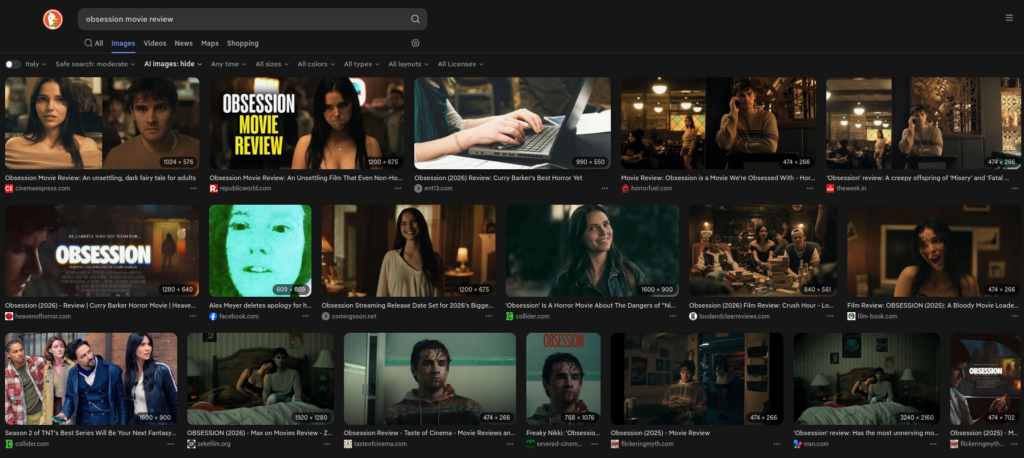
Looking at the iconographic legacy of Obsession, indeed, the vast majority of the frames chosen for posts, previews and reviews portray either a disrupt Bear or a creepy smiling or frowning Nikki, a complete disfigurement of the symbolism from narrations that preceded this movie in its genre. As someone who cares deeply about the potential of horror filmmaking to explore the depths of both human and other-than-human experience, it saddens me to see that what disappointed me so much about Obsession, its lack of an explicitly feminist perspective and a radical political stance, is the very reason that allowed a horror movie to become so commercialy successful in the first place, in virtue of being palatable to any audience, including the most conservative and misogynistic one. But after all, in a period of extreme popularity of the horror genre, it’s only to be expected for the industrial complex of cinema to twist it to produce more and more centrist, risk free cashgrabs that will captivate critics and masses from all sides of the political spectrum.
- Laura Malvey, Visual Pleasure and Narrative Cinema, Screen Vol. 13 Issue 3 (1975), pp. 6-18 [archived 1] [archived 2]
- Aviva Briefel, Monster Pains: Masochism, Menstruation, and Identification in the Horror Film, Film Quarterly Vol. 58 Issue 3, pp. 16-27 [archived]
- Mariana Colín, Backroomsession [spoilers], The Morbid Zoo [Nebula] [YouTube]
- Anthony Gramuglia, Alex Mayers’ Review of Obsession is the Worst Video of 2026 [YouTube]
- Eleanor Johnson, Obsession (2026): A Reflection on Audience and Misogyny, Eleanor’s Horrors [blog post]
- Emily Wilson, An Uncomplicated Man, London Review of Books Vol. 48 No. 14 (2026) [website]
- Mike Miller, ‘Obsession’ director Curry Barker reveals film’s original ending — and why his dad told him to change it, Entertainment Weekly [website]
- Perri Nemiroff, New Horror Movie Sensation ‘Obsession’ Had Its Ending Completely Changed, According to Star, Collider [website]
- Carol J. Clover, Men, Women, and Chainsaws: Gender in the Modern Horror FIlm (1992) [archived]
- Emma Stefansky, Obsession Knows What the TikTok Generation Fears Most, The Atlantic [website]
- Nikki Frowning / Obsession “How Your Girlfriend Looks At You” meme, KnowYourMeme [website]
- Princess Weekes, Guillermo del Toro’s ‘Frankenstein’ is in Conversation with every Frankenstein [Nebula] [YouTube]
- Mary Shelley, Frankenstein: Or The Modern Prometheus, Penguin Vintage Classics (2025), introduction by Jeanette Winterson [website] (couldn’t find an archived version)
- Jeanette Winterson, Frankissstein: A Love Story (2019) [archived]
Bug of the Month: Zombie ants
In a perfect horror fashion, today we’re gonna talk about zombie ants (to be fair, a more appropriate term would be possessed ants). Ophiocordyceps unilateralis is an insect-pathogenic fungus that parasitizes ants of the tribe Campomotini (in particular carpenter ants Camponotus leonardi), growing inside them and literally hijacking their nervous system. Primarily found in tropical rainforests, these fungi are capable of taking control of the ants’ nervovus systems and changing their behaviour, making them abandon their colonial nests high up in the canopy to reach the much more humid forest floor.
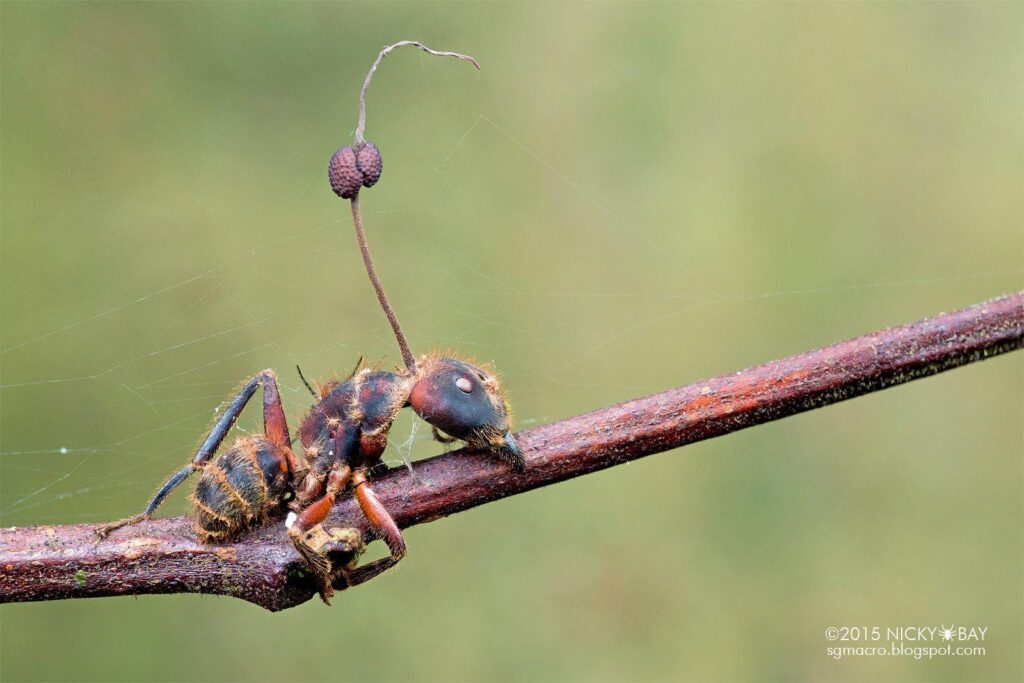

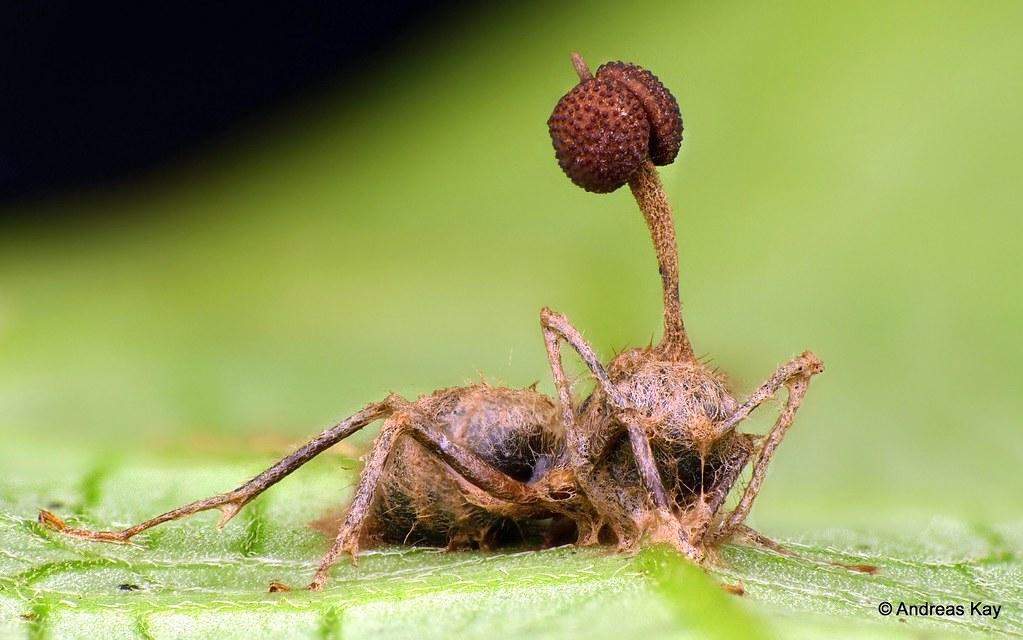
The ant then proceeds to find a place with the oddly specific ideal conditions for fungal growth: 26cm above the floor on the northern side of a plant, with a temperature between 20°C and 30°C and a humidity around 95%, possibly near a foraging trail of the colony in order to be able to infect other ants. Once they find the perfect spot, the ant gives one last, deathly bite to a twig or the major vein of a leaf from its underside, clamping it with their mandibles that quickly fall into atrophy with their muscle fibers disintegraating: the ant’s destiny is sealed, the death grip is gonna last until their death a few days later. During this period the fungus starts growing fruiting bodies from the ant’s head, expanding its mycelium inside the whole body which it uses as nourishment. The spores released by the fruiting bodies will then attach to other ants’ exoskeletons and slowly break in with enzymes, starting a new life cycle and populating entire areas of rainforest floor with graveyards of possessed ants (up to 30 dead ants per square meter).
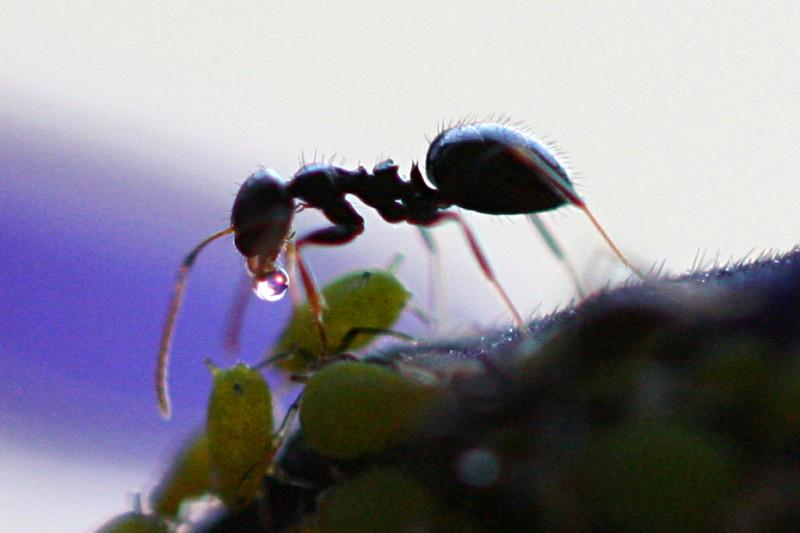
As a curious coincidence, in my blog post about piracy I talked about Attini ants inventing agriculture millions of years ago, and the carpenter ants I’m talking about today have instead invented animal farming. Numerous species of carpenter ants protect aphids from other insects and predators, and literally milk them for honeydew, a sugary substance they secrete from their anus as an excess while they feed on tree sap.